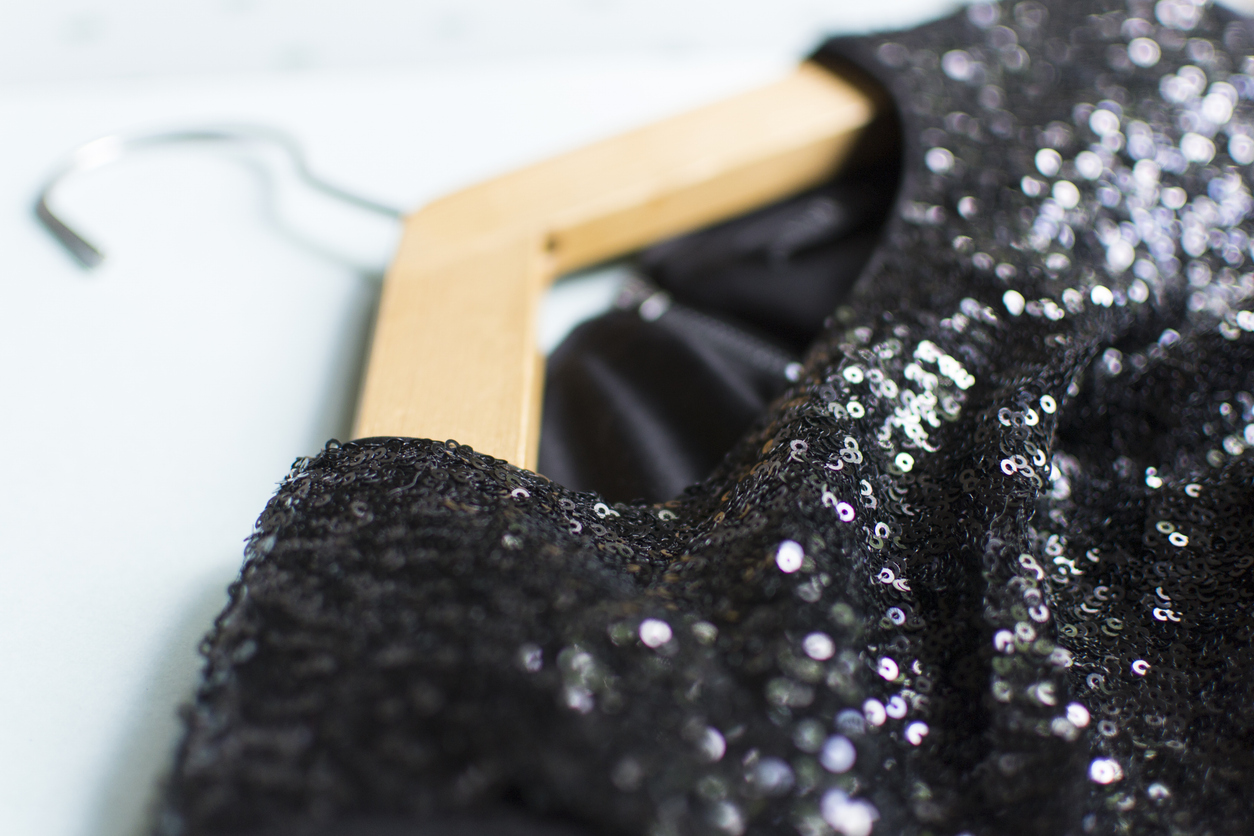
A sequined dress, top, or skirt isn't really one fabric. It's a fabric base with hundreds, sometimes thousands, of small plastic, metal, or composite discs attached to it. Each disc is its own point of failure: water dissolves one, heat warps another, detergent and agitation find the rest.
So can sequins be dry cleaned? Yes, and for most sequined pieces, it's the only method that doesn't damage the garment. To understand why, you need to know how sequins are attached in the first place. That construction detail is exactly why home cleaning fails, and why dry cleaning works.
Not all sequined garments are built the same way, and the attachment method determines how much risk you take on with any cleaning method. Here are the three you'll run into.
Found on higher-end pieces. Each sequin is stitched through one or two holes, individually secured. It's the most durable method, but durability isn't washable: thread weakens with water and agitation. You won't lose the whole garment at once, but you'll start losing sequins one at a time, often without noticing until there's a visible gap.
Common on mid-range and fast-fashion garments since it's cheaper to produce. Water dissolves the adhesive within minutes of submersion, not after several washes. Once the bond fails, sequins come off in clumps. Dryer heat speeds up the breakdown further.
Used in trim, beaded panels, and overlays. All sequins thread onto one continuous string, so breaking a single stitch point can release dozens at once. A snag, zipper, or rough seam elsewhere in the wash can catch the strand and unravel an entire section.
Here's the damage sequence when a sequined piece goes into a standard wash cycle:
The result: bare patches, dulled or scratched discs, and loose threads where strung sequins broke free. Most of this damage isn't repairable.
A "delicate" or "hand wash" machine setting reduces agitation, but detergent still strips coatings and water still dissolves glue. Gentler isn't the same as safe for a garment built from hundreds of fragile attachment points.
Hand washing removes the agitation problem, but it doesn't remove the rest. Here's what it still gets wrong – the most direct answer to how to wash clothes with sequins if you're set on trying it at home:
Hand washing is lower risk than a machine cycle. It is not no-risk, and for a garment you can't afford to damage, that distinction matters.
A damp cloth on a small stain is sometimes safe, but it depends on the attachment method under that exact spot. Testing an inconspicuous area first, such as an inner seam, tells you whether the nearby adhesive reacts to moisture. If you're unsure how to read that test, it's a judgment call a professional makes in seconds.
Dry cleaning uses solvents, not water, to dissolve oils and soil without touching the adhesives or threads holding sequins in place. No water means no trigger for the failure points that break down most sequin attachments.
The process is gentler, too. Garments tumble through solvent rather than getting agitated in a drum, so there's less physical stress and fewer chances for sequins to catch or pull loose.
Before cleaning starts, an experienced cleaner checks:
This inspection is what separates a cleaner running every garment through one default process from one treating each piece individually.
For sequined garments, treat both labels the same: professional cleaning only. If an alternative method goes wrong, replacing or repairing the piece almost always costs more than the dry cleaning visit would have.
A trim, scattered accents, or a beaded panel often means the care label reflects the base fabric, not the embellishment. If the label doesn't account for sequins specifically, default to the cautious approach: the most fragile part of the garment sets the safest cleaning method, not the most common fabric on it.
If you've made it this far, you already know the risk a washing machine poses to a sequined piece. The good news is you don't have to test that risk yourself; that's exactly why we're here.
At University Cleaners, we inspect every sequined garment before it ever touches our professional dry cleaning process. We check the sequin type, attachment method, and existing wear so we can choose the right approach for that specific piece. It's the same process we'd want used on our own closets, not a one-size-fits-all cycle, but real judgment applied to a garment that can't afford a mistake.
Drop off your sequined piece at any of our three locations, or skip the trip entirely and use our FREE Pickup and Delivery Service.
Contact Guide:
University Cleaners – Lexington
📍 534 E. Nelson St., Lexington, VA, 24450
University Cleaners – Augusta St. Staunton
📍 1007 N. Augusta St., Staunton, VA, 24401
University Cleaners – Richmond Ave. Staunton