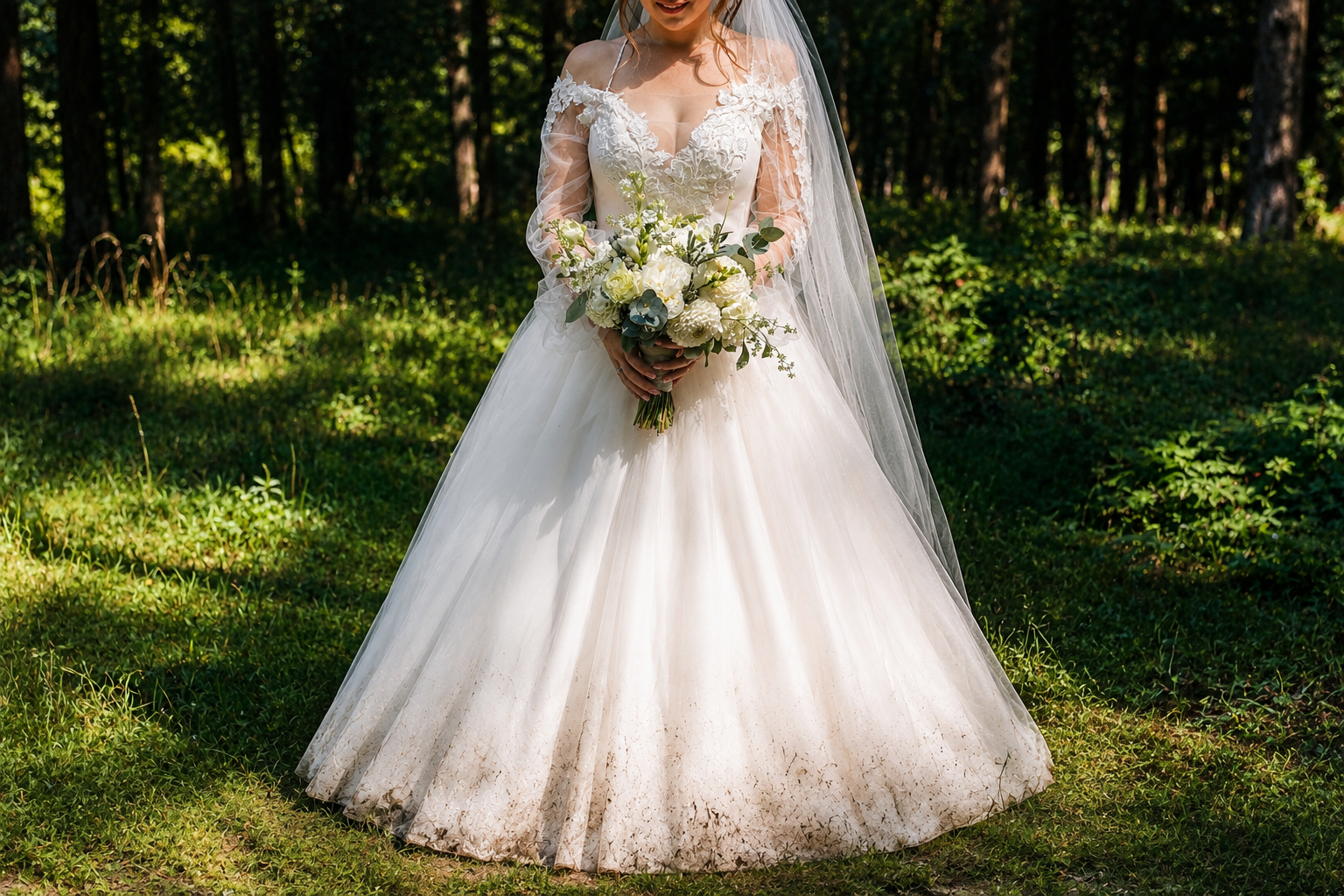
You said your vows at golden hour on an estate lawn. Or under a canopy at Rockbridge Vineyard in Rockbridge County. Maybe a mountain overlook ceremony at one of the Valley’s historic venues, where the Blue Ridge stretched out behind you while guests held their breath. The Shenandoah Valley produces the kind of weddings people talk about for decades.
And then there’s the dress, which, no matter how careful you were, spent six to twelve hours in one of the most stain-rich environments a wedding dress can encounter. Red clay paths, morning dew, pollen in the air, tannins from the vineyard. Most of these stains aren’t visible yet. Some won’t show for weeks. All of them require professional wedding dress preservation rather than home treatment.
Here are the seven stains outdoor Valley weddings specifically produce, what each one is, why home cleaning won’t fix it, and what professional treatment actually does.
The Valley runs on moisture. Creeks, mountain runoff, foggy mornings, and humid evenings mean that even a warm, sunny wedding day deposits ambient water into every hem that trails across grass or brushes a stone wall. The dress absorbs it without you noticing.
The problem isn’t the moisture itself. It’s what the moisture carries: soil particles, trace minerals, and organic matter from grass and plant contact. These compounds begin oxidizing in the fabric within days. By the time something visible appears, the staining is diffused and embedded throughout the hem, not concentrated in one spot.
Spot treatment is designed for localized stains. Hem moisture staining is the opposite: spread across the full length with no clear edges. Standard machine washing may actually set the oxidizing compounds further into the fiber. Professional hem pretreatment addresses the entire hem, lifting diffused mineral and organic soiling before it bonds permanently.
Lexington sits in the heart of Virginia’s red clay soil belt. If your ceremony or cocktail hour used any natural outdoor pathways, garden beds, or estate grounds, your dress made contact with iron rich red clay. On silk, lace, or cotton, it doesn’t sit on top of the fabric. It bonds to the fiber.
Heat makes it permanent. Dryers, irons, and direct sunlight accelerate the bonding of iron compounds to fabric. Do not attempt to dry or press any part of the hem until the dress has been professionally treated.
Water-based home washing distributes clay particles rather than removing them. The iron compounds require specific pretreatment agents that neutralize and dissolve them without damaging delicate bridal fabrics. Early treatment, within two to four weeks of the wedding, consistently produces the most complete removal.
Chlorophyll, the green pigment in grass, transfers to fabric when the dress makes contact with lawn areas, whether from walking across the reception lawn or posing for portraits. On ivory or white fabric, it appears as a yellow green discoloration.
Sunlight sets it permanently. This is the most important thing to know: if you lay the dress outside to air it, UV exposure bonds the chlorophyll to white fibers. What was treatable becomes partially permanent. Keep the dress out of direct light until it’s professionally cleaned.
Enzyme pretreaters can break down chlorophyll, but the versions used in household products are too aggressive for silk, chiffon, and lace. Professional enzyme treatment is applied by hand at controlled temperatures matched to the specific fabric type, removing the stain without the fiber damage that home methods risk.
Thinking about home treatment first? University Cleaners in Lexington, Virginia, offers professional Wedding Dress Cleaning and Preservation Service for Shenandoah Valley brides. The sooner you bring it in, the better the result.
This is the most common mistake brides make in the days after the wedding, and it turns a treatable stain into a worse spot. Brushing disperses pollen particles deeper into the fiber. Rubbing pushes the oil component – the sticky carrier that makes pollen adhere – directly into the fabric. Put down the dress and bring it in.
The Valley’s spring or early fall flowering season is one of its most striking features. It’s also a real staining risk. Pollen from wildflowers, ornamental plantings, and bouquets transfers to fabric through direct contact and through the air, settling as a yellow or orange dust across the upper bodice and skirt.
Pollen staining involves an oil component that bonds to fabric through a different mechanism than most stains. Water-based treatment spreads pollen oil rather than dissolving it. Dry cleaning solvent is specifically effective here; it dissolves the pollen oil as part of the standard cycle, with hand pretreatment applied to any concentrated deposits beforehand.
Lexington’s vineyard wedding venues are genuinely beautiful. They’re also one of the most concentrated tannin environments a wedding dress can spend the day in, and tannin exposure isn’t limited to a glass of wine spilling at the reception.
The ambient environment at a winery, the air near fermentation, proximity to grape residue, and the general organic richness of the setting deposit compounds on fabric through simple contact over several hours. These are invisible when the dress comes off. They oxidize over the following weeks into visible discoloration.
On silk and chiffon, tannins bond rapidly to fiber, and the body heat from hours of dancing accelerates the process. The window between a fully removable tannin stain and a partially permanent spot is measured in weeks. Dye release and enzyme pretreatment applied before the main cleaning cycle achieve what standard washing cannot do at any point.
The hem of a floor length dress comes into contact with the footwear of everyone nearby: the bride, the wedding party, and guests during the reception. Polished dress shoes leave petroleum compounds on the lower hem: dark smudges or a dull haze on fine fabric that appear weeks after the wedding.
Petroleum compounds don’t respond to water or standard detergents. Dry cleaning solvent dissolves them cleanly from fine fabric surfaces; this is actually one of the cases where the standard dry cleaning process is specifically well-suited to the stain type. No separate pretreatment step is required if the dress is taken to a professional promptly.
This is the stain that causes the most permanent damage, and it comes from the bride herself. Wearing a structured dress for eight to twelve hours in Virginia’s outdoor summer or fall heat means significant perspiration. Body oils and sweat absorb into the fabric at every skin contact point: neckline, waist, back, and underarm areas of the bodice.
None of this is visible when the dress comes off. Over the following months, these organic compounds oxidize into the yellowing and fabric weakening that represent the most irreversible damage to wedding dresses. Every week the dress sits unwashed, advancing that process.
This is the stain that can’t wait. Red clay and pollen are dramatic. Perspiration and body oil are quiet, and they’re doing the most damage right now.
Standard dry cleaning removes surface soiling. Wedding dress preservation includes an enzyme pretreatment that targets the protein and oil compounds bonded to the fiber itself. This step separates true preservation from a basic cleaning cycle. After cleaning, the dress is boxed in archival grade materials that prevent re-oxidation during long-term storage. That combination is what protects the fabric for years, not just until the next time you open the garment bag.
An outdoor wedding in the Shenandoah Valley produces a specific and predictable set of stains: red Virginia clay, morning dew, vineyard tannins, pollen, grass, shoe polish, and body oil. Most are invisible on the night of the wedding. All of them respond best to professional treatment when addressed within two to four weeks. Every week of delay advances the oxidation of invisible soils and narrows your options.
If you’re a Shenandoah Valley bride trying to figure out how to clean a wedding dress after an outdoor wedding, the honest answer is, don’t try at home. Take it to someone who knows what the Valley does to a dress.
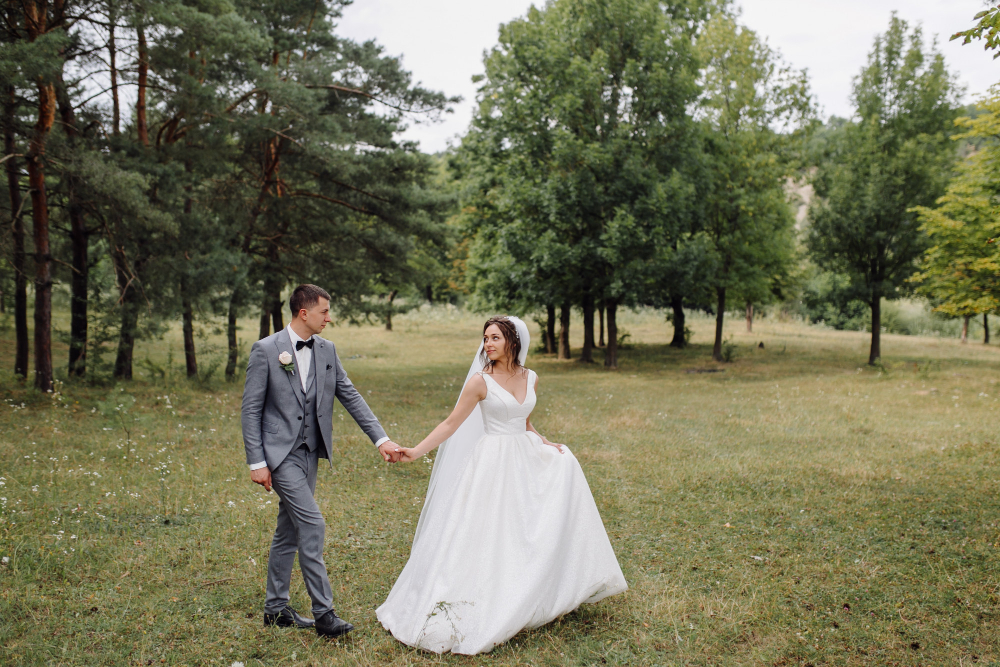
An outdoor wedding in the Shenandoah Valley leaves a mark on a dress that photographs never capture: grass chlorophyll in the hem, red clay embedded in the lace, pollen oil settled into the bodice over a full afternoon ceremony. The dress looks fine hanging in your closet right now. The damage is happening anyway, quietly, as the soils oxidize inside the fabric.
At University Cleaners, we care for the dresses Shenandoah Valley brides bring to us, some from the very vineyard estates and historic grounds covered in this article. Our preservation process addresses every stain type specific to this region: full-length hem pretreatment, solvent treatment for clay and shoe contact, enzyme pretreatment for perspiration and tannins. We treat the dress as a whole, not just the spots you can see.
Come in within two to four weeks of your wedding. We’ll take it from here.
Free Pickup and Delivery Service across the Shenandoah Valley
University Cleaners – Lexington
📍 534 E. Nelson St., Lexington, VA, 24450
University Cleaners – Augusta St. (Staunton)
📍 1007 N. Augusta St., Staunton, VA, 24401
University Cleaners – Richmond Ave. (Staunton)