The Clean Club
cleanermarketing
November 18, 2025

Your First Dry Cleaning Visit: Common Customer Questions

Contents

Although dry cleaning has been around since the 1800s, not everyone has had the chance to try it. If you're one of those people taking your clothes to a dry cleaning shop for the first time, it’s perfectly normal to feel a bit unsure.

The name β€œdry cleaning” alone often creates confusion about what’s actually happening. And without clear guidance, it’s easy to make assumptions that don’t line up with the real process. So let’s clear up the confusion. In this article, we walk you through the things most first-time customers wish they knew before dropping off their clothes.

What β€œDry Cleaning” Actually Means

A lot of first-time customers hear the term dry cleaning and assume it means their clothes never touch any kind of liquid at all. In reality, the cleaning solution used is a liquid solvent, just not water, so the process is β€œdry” only in the sense that water isn’t involved.

That matters because water can cause certain fabrics to shrink, stretch, or lose their shape, while solvent cleans without putting that kind of stress on the fibers.

How Dry Cleaning Works

Before we get into what makes this process so different, here’s what dry cleaning actually involves behind the scenes:

  1. Clothes are immersed in a specialized solvent. It dissolves oils and soils without making fibers swell the way water does.
  2. The solvent is circulated, filtered, and reused. Modern machines clean, distill, and recycle the solution throughout the cycle.
  3. Gentle mechanical action helps loosen dirt. The drum rotates more slowly than a washing machine to avoid damaging fabric.
  4. The machine dries the garment in the same chamber. Warm, controlled air removes the solvent safely and evenly.

So while the word β€œdry” can be misleading, the science behind dry cleaning is exactly what makes it so effective for delicate or structured clothing.

Why Some Clothes Say β€œDry Clean Only”

When you see a β€œdry clean only” label for the first time, do you think it's an overly cautious warning? Manufacturers add that label because certain fabrics simply can’t handle the stress of water, either physically or chemically. Some will shrink, some will lose their sheen, and others will fall apart internally, even if the outside looks fine.

Let's look at how different fabrics react to water:

  1. Fiber behavior matters. Wool shrinks dramatically in water, silk loses its luster, and rayon stretches and sags.
  2. Garment structure plays a huge role. Suits, coats, dresses, and jackets often have interfacing, padding, and linings that can dissolve or warp in water.
  3. Dyes can bleed or fade abruptly. Many rich or saturated colors are far more stable in solvent than in a washing machine.
  4. Textured fabrics need special handling. Pleats, creases, and delicate finishes can soften or disappear with regular washing.

So even if a piece β€œlooks” washable, that label is usually there for a very good reason, and ignoring it can ruin the garment in one wash.
How Stains are Treated

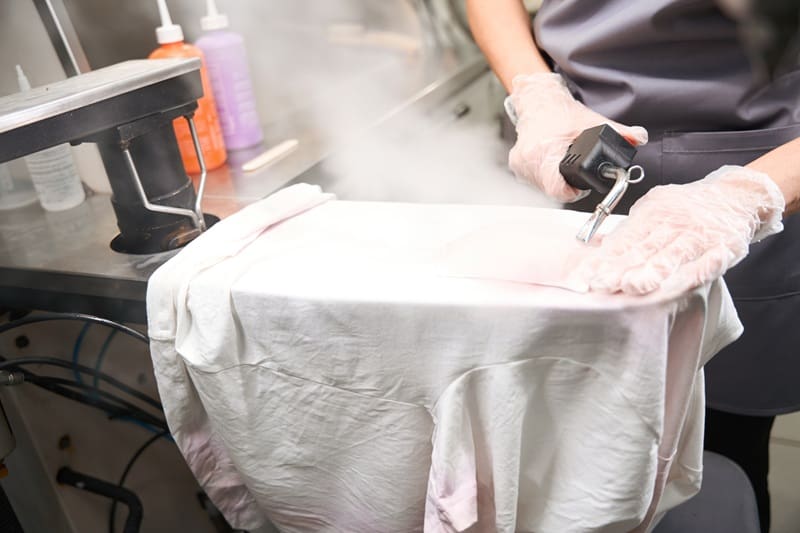
Person steaming a white shirt on a professional ironing board, with bottles of cleaning solutions visible in the background.

One of the biggest surprises for first-time customers is learning stains don’t just magically disappear in the machine. Stain removal is mostly a hands-on, skill-based process that happens before any cleaning cycle starts.

Different stains require different spotting agents, tools, and techniques, and using the wrong method can make the stain even harder to remove.

How Professional Stain Removal Works

Here’s what actually happens when a dry cleaner tackles stains the right way:

  1. Each stain is identified by type. Oil, protein, tannin, dye-based, or mystery stains each need their own specific treatment.
  2. Spotting tools help lift and break down the stain. Steam guns, compressed air, spotting brushes, and vacuum boards make the removal precise.
  3. Specialty chemicals are used sparingly and intentionally. Spotters target only the stained area to avoid disturbing dyes or fabric color.
  4. Heat and timing matter. Some stains require a warm treatment; others must stay cool to prevent setting.
  5. Garments are flushed and leveled. This ensures the treated area blends seamlessly with the surrounding fabric.

This is why professional stain work is often more successful than DIY attempts, as a lot of science and experience is involved.

Why the Turnaround Time isn’t Instant

First-time customers sometimes expect their clothes back the same day, only to learn dry cleaning takes more steps than they assumed. Unlike tossing something into a home washer, dry cleaning involves inspection, tagging, stain treatment, cleaning, drying, pressing, and quality control. Each step takes time and is critical to protecting your clothing.

Here’s what contributes to the timeline:

  1. Inspection and tagging must be careful and accurate. Every button, seam, stain, and label needs to be checked before cleaning begins.
  2. Pre-spotting stains is manual work. Stains are not treated by the machine; they are handled one by one.
  3. Dry cleaning machines operate in cycles. Once a cycle starts, it can’t be stopped or rushed, and garments must be cleaned in compatible loads.
  4. Drying is controlled and measured. Clothes dry inside the machine with solvent recovery, not in a quick household dryer.
  5. Pressing and finishing require precision. Each item is steamed, shaped, pressed, and rechecked for details.
  6. Quality control comes last. No item is returned until it passes a final inspection.

Because each step is deliberate, the end result is cleaner clothing, better fabric care, and significantly longer garment life.

Why the Turnaround Time isn’t Instant

One of the most confusing parts of a customer’s first dry cleaning experience is the wide range of prices from one cleaner to another. Some cleaners charge only a few dollars, while others charge significantly more for what seems like the same service.

But behind the scenes, the quality of equipment, the labor involved, and the solvent used can differ massively.

If you’ve ever wondered why the price tag varies, here are the biggest factors:

  1. Solvent choice makes a difference. Eco-friendly or specialty solvents cost more than older, cheaper alternatives.
  2. Training and expertise vary. Cleaners with skilled stain technicians or experienced pressers typically charge more and deliver better results.
  3. Equipment quality impacts results. Modern machines cost hundreds of thousands of dollars and produce cleaner, gentler results.
  4. Hand finishing vs. automated pressing. Hand-pressed items often look noticeably better but take longer.
  5. Extra care costs extra time. Detailed garment handling, layered inspection, and fabric-specific methods increase labor.
  6. Location and service level matter. Full-service cleaners, boutique shops, and cleaners in high-cost areas naturally price differently.

In short, a higher price often reflects a higher level of care, better equipment, and more experienced technicians watching over your clothes.

Get Clear, Reliable Care for Your Clothes at University Cleaners!

Give your clothes the expert dry cleaning care they deserve by trusting University Cleaners – a full-service dry cleaning company that has served central and western Virginia for over 70 years. We use gentle solvents and advanced techniques to clean deep, remove stains, and protect the structure of every garment.Β 

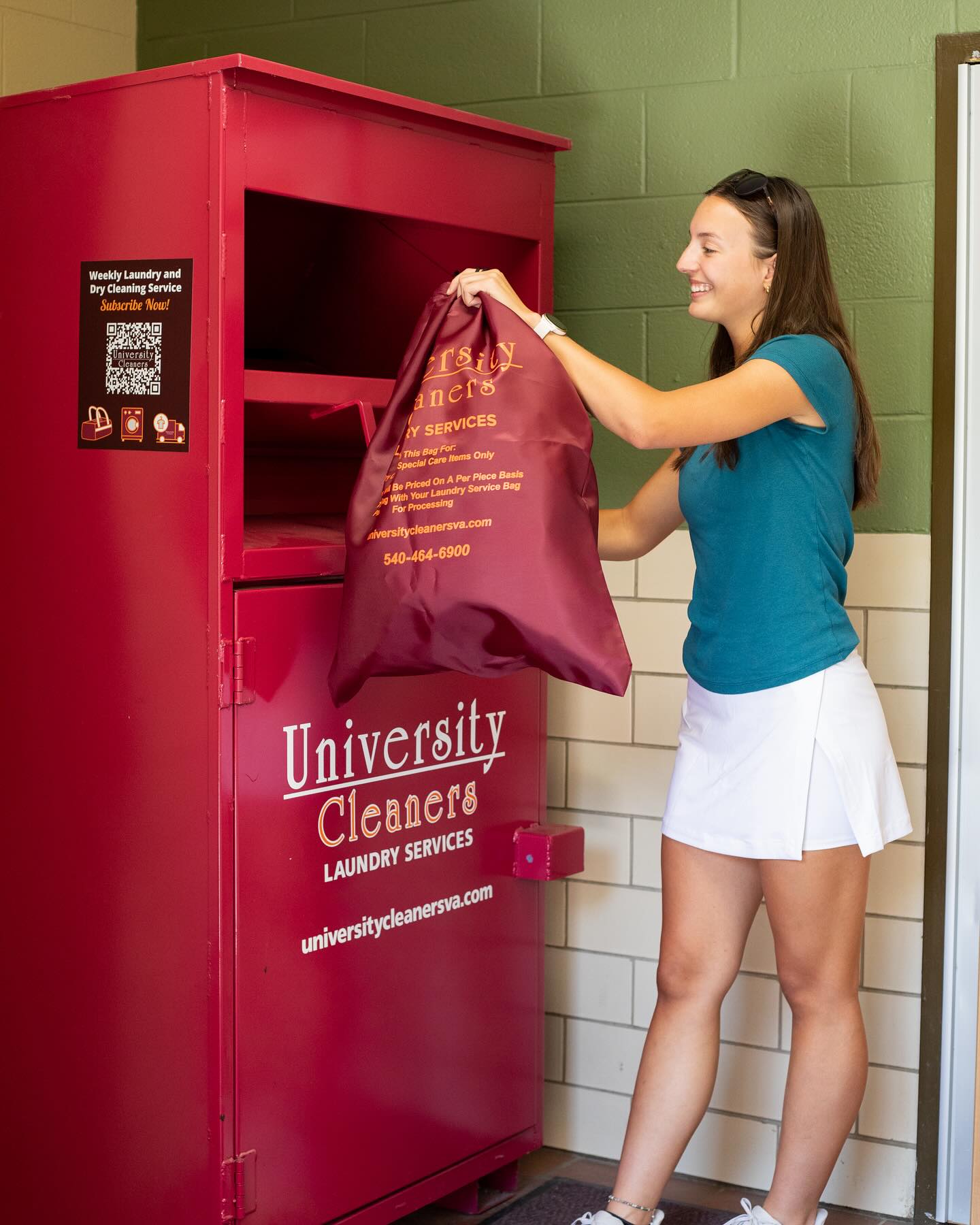
We’ve been voted Best Dry Cleaners in the Shenandoah Valley for 2024 and 2025, a recognition that reflects our dedication to quality and care. From our mobile app and text notifications to FREE Pickup and Delivery Service and 24/7 drop-off bins, we’ve designed every part of our service around your schedule.

Take the easy route to looking sharp. Book your next dry cleaning order with University Cleaners in Lexington. We’ll handle every detail from pickup to delivery.

Contact and Scheduling

Phone: 540-464-6900

Email: info@universitycleanersva.com

Free Pickup and Delivery | Retail Routes: Staunton, Waynesboro, Fishersville, and Verona (Mon–Thu) β€’ Lexington and surrounding areas (Tue–Fri)

About
Two blue and gold badges read "Shenandoah Valley Best Winner, Harrisonburg Media Group" with one for 2025 and the other for 2024.Logo for the Virginia Department of Small Business & Supplier Diversity indicating certification for Small, Women, and Minority-Owned (SWaM) businesses.A smartphone displays the University Cleaners app sign-in screen, surrounded by colorful bubbles and a "Download App" icon with a downward arrow.
Retail Stores
University Cleaners – Lexington
534 E Nelson St, Lexington, VA 24450
University Cleaners – Augusta St. (Staunton)
1007 N Augusta St, Staunton, VA 24401
University Cleaners – Richmond Ave. (Staunton)
729 Richmond Ave Apt D, Staunton, VA 24401
Proudly serving Shenandoah Valley with trusted garment care and FREE Pickup & Delivery Service.
Copyright Β© 2025 All Rights Reserved. Designed by Cleaner Marketing
crossmenu